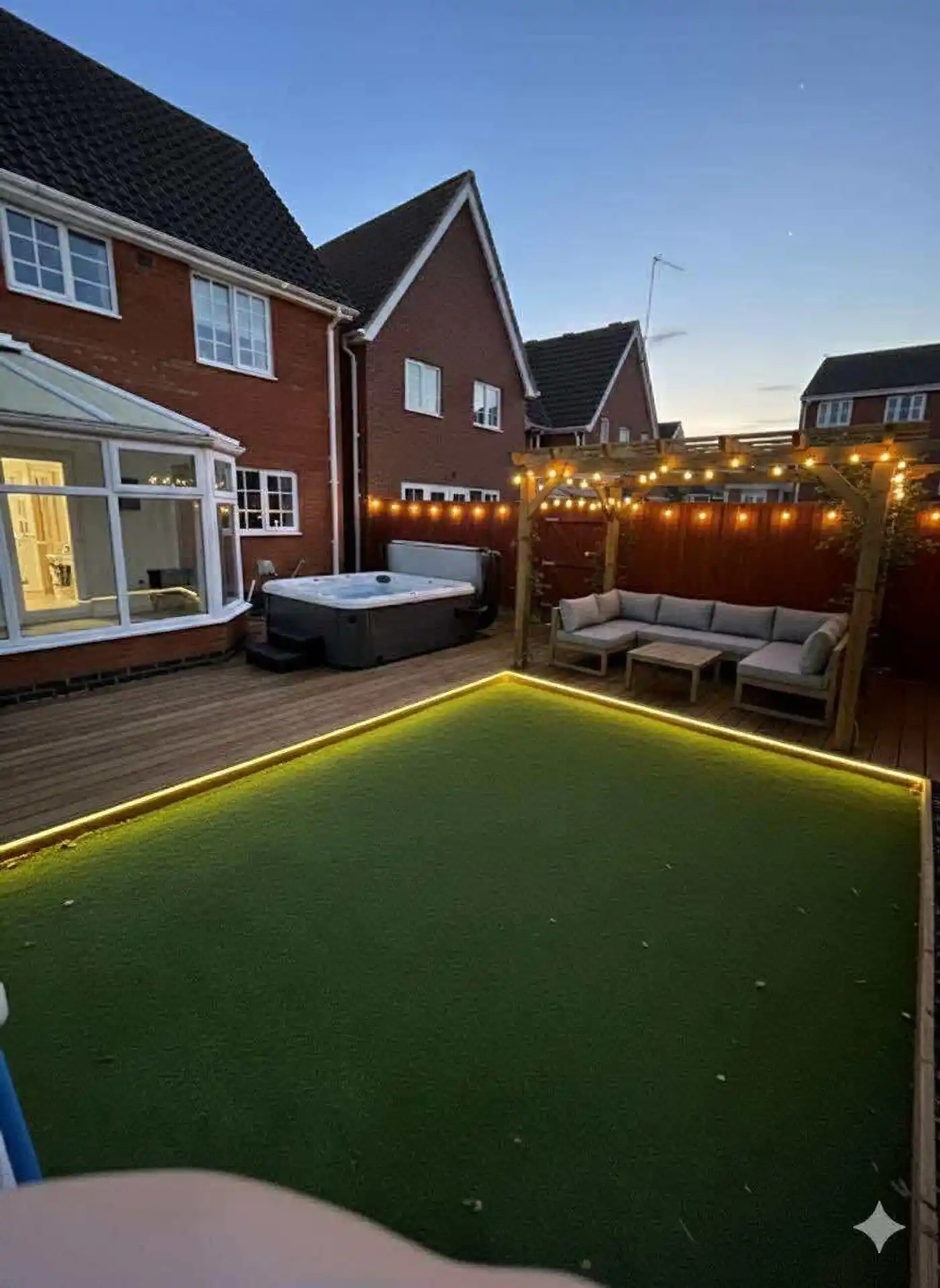
Looking after artificial grass in autumn
Artificial grass is sold as low maintenance, and it is. It is not no maintenance, and autumn is the stretch that decides how it looks for the next two years.
Most of what goes wrong with artificial grass goes wrong on top of it rather than in it, and almost all of it starts in October.
Why it goes green
Nothing is growing out of the grass. What is growing is in the layer that has settled on it.
Leaves, seed, pollen and general garden dirt break down into a thin crust across the surface. That crust holds moisture, and moss and algae root into it readily. Shade makes it worse, so the strip down the fence line and anything under a tree goes first.
There is a second problem underneath. Artificial grass drains through perforations in its backing. Fine debris works into those holes and blocks them, so water that used to pass straight through starts sitting on the surface instead. Once it stops draining, it stays damp, and damp is the thing moss actually wants.
That is the whole mechanism. Debris holds water, water feeds moss, blocked drainage keeps the water there.
Why the jet wash is the wrong reach
When a lawn goes green the instinct is to blast it, and it is the single most likely way to wreck it.
A pressure washer can lift the seams where two pieces join, drive the sand infill out of the pile, flatten the fibres so they never stand up properly again, and push the dirt deeper into the base rather than lifting it off. The surface can look better for a fortnight and be in worse condition than before.
The part that costs money is the warranty. Damage caused by pressure washing is commonly excluded, so a job meant to clean the lawn can be the thing that voids cover on it. Terms vary a lot between manufacturers, and the written terms are what decide a claim, so it is worth reading them before anyone starts rather than after.
Harsh chemical cleaners carry the same caution for the same reason. They can degrade the backing and the fibres, and that damage is not usually covered either.
Weeds come in at the edges
This surprises people. There is a membrane under a properly laid lawn, so very little germinates up through the middle of it.
What happens instead is that wind-blown seed lands in the debris sitting on the surface and takes root there, and it does it first where debris collects: along the perimeter, against walls and fences, and down the seams. Pulling those by hand as they appear takes a couple of minutes. Leaving them lets the roots work into the joins, which is a far bigger job to put right.
So the maintenance is mostly the edges and the surface. The field in the middle largely looks after itself.
The ten minutes that actually matter
None of this is difficult. It is just frequent.
- Clear the surface before the debris breaks down. Weekly through October and November if there is anything overhanging, less often if not. A stiff brush, a leaf blower on a low setting or a plastic rake all work. The point is getting it off before it turns to mulch.
- Brush the pile the opposite way to how it lies. This lifts the fibres back up and redistributes the infill. Paths where people walk the same line flatten first.
- Watch what happens after heavy rain. Water should be gone within minutes. If it is pooling, the drainage is blocked, and that is the thing to deal with rather than the green.
- Walk the edges. Pull anything rooting in the seams or against the boundary while it is still small.
The bit nobody checks
Under the fibres there is a layer of sand. It is doing two jobs: holding the pile upright so it does not go flat, and keeping the surface draining.
It migrates over time, particularly where people walk. It wants to sit up near the base of the fibres without burying the tips. If the pile is lying flat in the busy spots and no amount of brushing lifts it, low infill is usually why.
Two things are worth knowing if it needs topping up. Use washed, kiln dried sand, because unwashed sand carries fine dust that ends up in the drainage holes you are trying to keep clear. And use rounded grains rather than angular ones, because angular sand works like a very slow abrasive against the fibres.
When it is past maintenance
There is a point where brushing and clearing stop being the answer.
If weeds have rooted through the seams, if the lawn holds water long after rain whatever you clear off it, or if it has gone wavy and sits unevenly, the problem has moved underneath. At that stage the fix is to lift it, put right the base and the edges, and relay it.
That is usually better than replacing. The grass itself is often still perfectly sound, and what has failed is everything around it. Worth having someone look before you price up a new lawn, because the two jobs are not the same money.
If you want a hand with it
We take on artificial grass across Norwich and the surrounding villages, both the regular clearing and the bigger lift and relay jobs.
If yours has gone green, is holding water or has weeds coming through the joins, request a free quote and we will come and tell you honestly which of the two it needs. It sits among the other jobs we take on rather than having a page of its own.
Not answered here?
Ring Danny and ask. He would rather talk it through than have you guessing.
Questions we get asked about this
01. Can you jet wash artificial grass?
You can, and it is usually a bad idea. A pressure washer can lift the seams, drive the infill out of the pile, flatten the fibres and push dirt further into the base rather than off it. More to the point, damage caused by pressure washing is commonly excluded from the warranty, so it can turn a cosmetic problem into one nobody will cover. Check your own written warranty before anyone points a lance at it, and if the surface genuinely needs more than brushing, ask the installer what they allow.
02. Why is there moss when nothing can grow in it?
The moss is not growing in the grass, it is growing in what has settled on top of it. Leaves and fine debris break down into a thin layer that holds damp, and moss will root in that quite happily. It is why shaded lawns and ones under trees go over first. Clearing the surface before the debris breaks down is most of the job, and it is the reason autumn matters more than any other time of year.
03. Can old artificial grass be lifted and relaid rather than replaced?
Often yes, if the grass itself is still sound. Where weeds and moss have taken hold but the pile has life in it, lifting it, clearing and correcting what is underneath and relaying it is usually the better answer than buying new. What decides it is the condition of the base and the edges rather than the look of the surface, so it is worth having someone check before you price up a replacement.
Get a free quote for your garden
Tell us what you need doing and Danny will come out, take a look and give you a price. No charge for the visit and no pressure afterwards.